
Thomas Carlyle: “Cant”
We are in the age of Carlyle’s “cant”

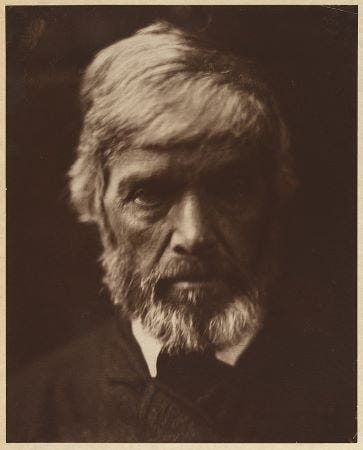
Thomas Carlyle: “Cant”
Thomas Carlyle saw something in modern life that has only grown more obvious with time. He saw the rise of “cant”: not mere hypocrisy, not ordinary lying, not simple error, but respectable falsehood dressed in the language of truth. Cant is what happens when moral words survive after moral seriousness has departed. It is the vocabulary of conviction without the inconvenience of conviction itself.
Meriam Webster: the expression or repetition of conventional or trite opinions or sentiments
especially : the insincere use of pious words
the cant of hypocrites
Cant is one of those old words that deserves to be rescued from the museum. We still perhaps use it very occasionally, but usually in too small a sense. We think it means pious humbug, the false language of the smug, and self-righteous. It does mean that, but in Carlyle it means something deeper and more dangerous. Cant is not merely lying. It is lying with the manners of truth. It is falsehood after it has learnt to speak in moral, religious, political (especially in our time) or humanitarian phrases.
Cant is the respectable lie.
Carlyle admired Samuel Johnson because Johnson, whatever else he was, was not a man of cant. He was rough, prejudiced, melancholy, Tory, pious, awkward, tender, devout, ridiculous, and magnificent, but he was real. His great command was, “Clear your mind of Cant.” Carlyle loved that. Clear it. Throw it away, do not merely tidy it up, moderate it, baptise it, or issue a committee report on it. Be done with it.
That is the point, Cant is not defeated by becoming slightly less excessive. It is not defeated by becoming more inclusive, therapeutic, democratic, or emotionally intelligent. Cant is defeated by reality. What makes our age so Carlylean is not that people lie, all ages lie. What marks our age is that lying has become institutional, sentimental, respectable, and professionally managed. We do not simply tell lies. We laminate them, we put them into mission statements. We attach lanyards to them, we train people in them. We put them on websites beside stock photographs of impossibly diverse young people smiling at laptops.
We are drowning in official unreality.
Celebrity culture may be one of the purest forms of modern cant, because there we see the empty person dressed up as a moral oracle. Actors, singers, presenters, influencers, (even Substackers) and assorted professional faces, many of whom have lived lives of almost unimaginable insulation from ordinary consequence, now lecture the public on justice, kindness, democracy, climate, borders, health, war, peace, poverty, and whatever else the approved cause of the week happens to be. Their politics is often only another performance, their compassion another brand extension, their courage a carefully managed pose delivered to people who cannot afford the views they are being scolded into holding. It is not that a famous person can never say anything true, of course they can, but the culture itself turns moral seriousness into costume, and then applauds the costume as if it is actually true, and not just an empty act. Even worse than the above is the fact that some people actually listen to them and “follow” them.
If you enjoy or get something out of my work but can’t quite stretch to a full paid subscription each month (I know the feeling) or if you just want to bless me with a one off gift, you can always throw a wee donation my way over on Buy Me a Coffee/beer. A big thanks to those who already have, it really does mean a lot and helps more than you’d think.
Every age has its ruling vocabulary. Ours is particularly rich in cant. “Compassion” often means spending other people’s money to avoid facing the consequences of one’s own principles. “Diversity” frequently means a room full of people who look different and think exactly alike. “Inclusion” can mean excluding anyone who refuses the approved liturgy. “Safety” increasingly means emotional control by bureaucratic means. “Democracy” means ignoring the demos until they vote wrongly, then explaining that democracy itself is in danger. “Progress” means that whatever existed yesterday must apologise for not having been invented this morning.
This is not language, it is fog.
Carlyle would have recognised it at once. He lived in an age of expanding bureaucracy, newspapers, reform movements, utilitarian schemes, industrial gigantism, and public moral enthusiasm. He saw that modern man was becoming frightfully clever at talking about virtue while losing the habits that make virtue possible. He distrusted the smooth talker, the reforming windbag, the philanthropic careerist, the man whose sympathy always seems to require an audience. He had an almost physical hatred of sham. Not because he was against symbols, quite the reverse. Carlyle understood symbols better than most, a crown, a pulpit, a wedding ring, a flag, a uniform, a church, a constitution, a custom, these can all be noble garments for living realities.
But when the reality dies, the garment becomes costume, and costume, worn solemnly over a corpse, is cant. Welcome to the UK…..
This is where Carlyle is so useful now. We live among institutions that still wear the clothes of moral seriousness. Universities still speak of truth, churches still speak of love, governments still speak of service. Corporations speak of community, media organisations speak of accountability, and charities speak of care. Yet everywhere one senses the same hollow centre. The old words remain, but they have been emptied, stuffed, and put in the window dressing. Truth becomes narrative, virtue becomes branding. Compassion becomes policy theatre, courage becomes compliance with fashionable opinion. Repentance becomes a press release, justice becomes whichever arrangement flatters the powerful while congratulating the weak on their sensitivity.
Cant is what remains when civilisation has lost its soul but kept its vocabulary.
The genius of Carlyle’s command is its simplicity. Clear your mind of cant. Not society first, not Parliament, not the BBC. Not the university, not the churches. Your mind, My mind. That is the painful bit, we all prefer to spot cant in our enemies or those who irritate us. There is no great talent required for that. The real work begins when we detect it in our own side, our own tribe, our own favourite phrases, our own harmless little exaggerations, our own righteous poses. For Carlyle, sincerity was not niceness. It was not modern authenticity, where a man loudly advertises his feelings and calls that honesty, sincerity meant contact with reality. It meant that words, deeds, beliefs, and life had not wholly parted company. The sincere man may be wrong, but he is at least still a man. The man of cant has become nothing but a mere arrangement of phrases.
That is why cant is so spiritually deadening, it paralyses the mind. It makes thought unnecessary. Once the approved words have been spoken, reality need not be consulted. One has signalled compassion, displayed awareness, affirmed values, condemned hate, celebrated progress, and centred voices. What more could truth possibly require?
Quite a lot, as it turns out.
It might require courage, it might require repentance, it might require silence. It might require the hard admission that the slogans are not working, that the policy has failed, that the expert was wrong, that the compassionate thing has produced cruelty, that the enlightened class has become stupid, and that the people dismissed as backward may have been seeing something real all along. Carlyle is not comfortable company, great thinkers rarely are, but he is bracing company. He comes into our padded, managed, HR-approved age like a bad-tempered prophet with muddy boots, kicking over the scenery, and asking whether anything solid stands behind it, and that is why we need him.
Because this is the age of cant, not the age of disbelief, exactly, it is worse than that. It is the age of borrowed belief, performed belief, managed belief, weaponised belief. It is an age where men no longer pray, but still know how to sound pious; no longer repent, but still know how to accuse; no longer believe in truth, but still know how to denounce “misinformation”.
Against all of that comes the old Johnsonian thunder, loved by Carlyle because it was simple, masculine, cleansing, and true:
Clear your mind of Cant.
I want to keep this work free and outside paywalls. That matters to me, however that means relying on the support of you my readers. I’m not a brand, public figure, or celeb, I’m a working man (painter/handyman/labourer) trying to write carefully and independently. If this work has meant something to you, a paid subscription is one way to help keep it going. Paid Subscriptions have gone down lately, but I’m genuinely grateful for all of you who have.
“We are drowning in official unreality.” Delicious phrase. Bitter truth.
Canter….my o my. New favourite word.